한국어 日本語 English

Software Engineer · Tokyo, Japan

Minhyuk Yoo

I build services that keep running reliably long after release.

Email me LinkedInGitHub
Minhyuk Yoo
  • 7 + years experience
  • 4 companies
  • 3 languages
  • 5 certificates

01About

A software engineer who builds and protects services that must not stop, from payments to energy.

I have worked in Japan since 2020. At SECURE, a sales-driven venture company that had just started building its own service, I joined at the start of development and owned the whole service, from frontend to infrastructure and IoT hardware, through initial development, release and server setup.

At Rakuten I ran batch systems, monitoring and operations for an electricity and gas service. Beyond operating a large-scale service reliably, I learned how work gets done in a large company: structured workflows, reporting lines and operational processes.

Today, at Symmetria, I develop and maintain the payment platform of a payment service provider.

Nationality
Republic of Korea
Date of birth
1994.12.07
Korean
Native
Japanese
Business (JLPT N1)
English
Technical reading

What I value at work

01

Communication

Development is never a solo job. It takes constant communication with planning and sales, and above all an accurate understanding of why a feature or change is being requested. Building what serves that purpose, rather than exactly what was asked, is what delivers the result that is actually needed.

02

Connectivity

I look beyond my own scope to the projects and services connected to it, and even to outside services. Noticing how another service differs from ours, or asking whether a recent security incident elsewhere could affect us too, is how I learn from those connections and prepare in advance.

03

Improvement

To me, progress is not adding new features but improving what already exists until the results are better: raising revenue, refining the UI and UX so users have an easier time, or automating workflows so the team works more efficiently. I always look for improvements that lead to outcomes like these.

02Experience

  1. 2024.10 – Present 2 yrs 2 mo

    Symmetria Inc.

    Japan

    GMO Payment Gateway payment platform (payment methods: development & maintenance)

    • Java 11
    • Spring Boot
    • PHP 8.3
    • Symfony
    Batch performance
    • Analyzed a batch job that was running out of memory (OOM) and made its SQL data reads more efficient
    • Eliminated the OOM failures and shortened batch run time
    Security
    • Added CSRF protection and handled other security fixes for the payment service
    UI renewal
    • Redesigned existing screens to be more compact and easier to read
    Payment method development
    • Developed and maintained additional payment-method processing (Spring Boot / Java 11, Symfony / PHP 8.3)
    • Investigated and resolved memory and performance issues in production
  2. 2023.01 – 2024.05 1 yr 5 mo

    Rakuten

    Japan

    Rakuten Energy (electricity & gas services)

    • Laravel
    • Salesforce
    • Jenkins
    • Grafana
    • Selenium
    Batch systems
    • Developed and maintained batch jobs with Laravel Command
    • Wrote crontab schedules and maintained the batch schedule table
    Monitoring
    • Automated error-log notifications by integrating Jenkins with Slack
    • Monitored server load with Grafana
    • Wrote error checking and handling manuals
    Operations & automation
    • Wrote and ran SQL/SOQL operation manuals
    • Improved operations by simplifying and automating manuals
    • Streamlined bulk test-data creation with Selenium and Swagger API
    Development
    • Development through design (basic, detailed) → testing (unit, functional, integration, performance) → release
    • Integration with an external CRM (Salesforce) and API communication testing
    • Local development environment setup and manuals
    Ways of working
    • Followed a staged, document-driven workflow from design through review, testing and release
    • Shared progress, issues and incidents and escalated them through defined reporting lines
    • Coordinated roles and schedules within an operating model spanning several teams
  3. 2020.04 – 2022.04 2 yrs 1 mo

    SECURE Inc.

    Japan

    Face-recognition entry/exit management service

    • Laravel
    • AWS
    • IoT
    • MQTT
    • GitHub Actions
    • Selenium
    IoT module development & setup
    • Built OS images (network and security settings)
    • Communication between IoT modules, servers and authentication cameras
    • Real-time error monitoring (AWS MQTT & CloudWatch)
    Infrastructure & CI/CD
    • Separate environments (develop, staging)
    • CI/CD with GitHub Actions
    • Auto scaling and load balancing for server stability
    • Wrote and ran Selenium test cases
    • Managed and renewed SSL certificates
    User requests
    • Provided a separate API (Swagger documentation)
    • Bulk image registration and improved user logic
    • Fixed cache issues by introducing Laravel Mix
    • Saved video logs before and after camera-sensor detection

    In-house equipment management service

    • Laravel
    • Azure
    Service development
    • Owned basic design and all development (Laravel, Azure)
    • User support and maintenance
  4. 2016.12 – 2018.07 1 yr 8 mo

    YMK

    Korea

    Display manufacturing equipment

    • PLC
    • Samsung Display
    Equipment control & field service
    • Modified equipment motion-control logic in PLC programs
    • Field service engineer at Samsung Display factories
    • Built and assembled equipment; electrical wiring and IO testing

03Side projects

Programs I built on my own time because I needed them.

Danta (Crypto Scalping Bot)

A personal auto-trading program that uses the Upbit API to find the most volatile coins in real time and trade them short-term by fixed rules, showing a forecast of the average daily profit or loss for the seed amount based on past prices

Why I built it I wanted to automate short-term trading of the most volatile coins found in real time, and to know in advance roughly how much I might gain or lose per day relative to my seed amount.

  • Real-time candidates: builds 1-minute bars from every second's prices across the KRW market and lists coins that meet a trading-value threshold, ranked by volatility
  • Trading rules: follow surges or buy rebounds (take-profit, stop-loss, maximum holding time), plus a separately switchable spike mode that buys coins jumping sharply within seconds and sells as soon as new highs stop; limits on seed, order size and number of positions
  • Runs as paper trading first; real orders only after typing a confirmation on screen (Upbit JWT auth, registered IP), with separate records for paper and live
  • Daily P/L forecast: replays the past days of 1-minute bars with both rules and the same settings, comparing daily average, usual range, share of winning days and fees side by side
  • Settings search: when the forecast is negative, tries thousands of combinations of rule, signal conditions, take-profit, stop-loss and holding time on the earlier days, keeps only settings that stay positive on held-out later days, and applies one to trading in a click (runs in a worker thread so trading never pauses)
  • Runs in Docker on a home PC, with automated tests of the full order flow against a fake Upbit server
  • TypeScript
  • Node.js
  • React
  • Upbit API
  • Docker
  • Playwright
  • GitHub Actions

Jeojeom (Low-Point Radar)

A personal stock-analysis site that shows, for about 900 Korean and US stocks, how close each one is to its own lowest price and when it fell or rose the most, and each day recommends where to put my capital, with reasons drawn from that day's prices, indicators and historical statistics

Why I built it Brokerage apps are easy to browse, but none of them put what I most wanted to see on one screen: which stocks are near their own lows right now, and when each fell or rose the most. So I built my own tool, for personal use rather than as a product. I then added a daily recommendation as the core feature: it looks at that day's numbers and suggests where to invest now, with its reasoning.

  • Daily recommendation: twice each weekday after the market close, index, market-breadth and exchange-rate signals set the cash share and the Korea/US split, and stocks are picked by what happened in the six months after past days in a similar position (share that rose, median, bad case, compared with normal) plus the low-point score, shown with reasons, risks and the score formula. It runs in GitHub Actions with no external AI cost (with a Claude API key, the AI writes it from the same numbers), and each past recommendation is tracked against the same Korea/US mix of index ETFs
  • My holdings: record the stocks I bought (ticker, quantity, price, date) to see market value, profit and loss, today's change and a daily record from the first purchase, calculated from closing prices; past recommendations show what the same amount would be worth now. All amounts can be shown in won, dollars or yen, using each day's exchange rate
  • Low-point radar: KOSPI 200, top KOSDAQ stocks by market cap, the S&P 500, the Nasdaq-100, major ETFs and my watchlist, sorted by closeness to their 1-, 3-, 5-year or all-time low, with the drop from the all-time high and the biggest falls and rises in one table
  • Stock view: a hand-built SVG chart marking the biggest drawdown and run-up, the high and the low, how long recovery took, the largest one-day and one-month moves, and yearly returns
  • What if I had invested then: click a date on the chart to calculate a lump-sum or monthly investment in won (US stocks at that day's exchange rate, with dividends reinvested)
  • Capital split: style-based scores (closeness to the low, drop from the high, long-term growth, volatility, trend) shown with their formulas, then candidates and share counts within ETF, Korea/US and per-stock limits. GitHub Actions collects prices twice a day into a private repository, and the site reads them only with my own token
  • React
  • TypeScript
  • SVG
  • GitHub Actions
  • GitHub API
  • IndexedDB
  • Node.js
  • Playwright
  • GitHub Pages

PageNest

A personal docs and work-notes app with nested pages and blocks for text, tables, code, flowcharts and kanban boards — stored in the browser with no server, and synced between PC and phone through your own private GitHub repository

Why I built it The docs and note apps I used kept their useful features behind paid plans and still lacked things I needed. So I built one I can use every day: solid basics first, then work features added one at a time.

  • Hand-built block editor: slash menu (searchable in Korean, even by initial consonants), Markdown shortcuts, indenting and drag-to-move, formatting toolbar, [[ page mentions with backlinks, code highlighting, math (KaTeX), tables, images and undo — keys are handled separately during IME composition so Korean typing never breaks
  • An SVG flowchart editor (Tab adds the next step, drag from an edge to connect, auto layout, export to PNG, SVG or Mermaid), text-based charts (sequence, Gantt and more), kanban boards and a table of contents
  • For work: templates such as meeting notes, weekly reports and project plans, a one-click daily work log, a calendar showing each day's logs, pages created or edited and to-dos due, and every to-do across all pages gathered by due date (dates are read from the text)
  • No server: stored in IndexedDB and usable offline. Syncs with your own GitHub repository through the Git Data API, sending only changed files in one commit (a three-way comparison of device, last sync and repository; conflicts are kept in version history). Version history, trash, backups, Markdown export, and about 70 UI test steps checked automatically in CI
  • A notepad that is ready the moment it opens: tabs, auto-continued lists, find and replace, date stamps, and opening and saving text files on your computer, with memos synced through the same repository as PageNest. Install it from the site as an app, or download the Windows or Mac installer to use it like a desktop program (Tauri; installers are built automatically by GitHub Actions)
  • React
  • TypeScript
  • IndexedDB
  • GitHub Git Data API
  • SVG
  • Mermaid
  • KaTeX
  • Service Worker
  • PWA
  • Tauri
  • Playwright
  • GitHub Actions
  • GitHub Pages
Try it ↗

Medicine Timetable

Turns the medicines you take—entered by voice, photo or name—into a morning, noon, evening and bedtime schedule and shows what each one is for and contains; older people, their caregivers or the pharmacist can all enter them

Why I built it I wanted to build something that removes an everyday inconvenience. Uploading files or typing is hard for older people who take many medicines, so simply talking is enough. It is also designed so that a caregiver, or the pharmacist handing over the medicine, can enter it on their behalf.

  • Voice input: waits while you speak slowly, asks aloud "Is that everything?" every 30 seconds and finishes on "yes"; continuous speech is split per medicine by reading time, dose and name in order, and misheard names are corrected against the real drug list (rule-based, no AI)
  • When a prescription changes, the new pharmacy bag is compared with the current schedule to show only new, stopped and changed medicines. At the pharmacy, the pharmacist enters the medicines and prints a large-print schedule with pill illustrations and a QR code; scanning it with a phone camera loads the schedule (QR generation written from scratch, data carried in the URL with no server)
  • Next hospital visit: checkup and appointment dates are shown large at the top of the schedule, on the home screen and on the printout (red for today and tomorrow), and a calendar file (.ics) adds phone reminders the day before and on the day. Medicine cabinet cleanup: find the pills at home by color, shape and imprint, then sort them into keep, throw away, and ask the pharmacist (same active ingredient as another medicine). Emergency info sheet: conditions, allergies, contacts and current medicines printed as a fridge sheet and a wallet card (blood thinners and similar flagged at the top, with a reprint reminder when medicines change). Test result log: record checkup values to compare with the previous visit and see them as a graph (normal, borderline or caution per Korea's national health screening criteria).
  • GitHub Actions collects about 35,000 drugs from Korea's Ministry of Food and Drug Safety open data (approvals, easy drug info, pill identification) every month and deploys a static site, with uses, ingredients, warnings and pill illustrations drawn in code; photos of pharmacy bags and prescriptions are read in the browser with an OCR model (PaddleOCR, ONNX) and matched by insurance code, and medicine lists and photos never leave the device
  • React
  • TypeScript
  • Web Speech API
  • PaddleOCR + ONNX Runtime Web (OCR)
  • QR Code
  • SVG
  • data.go.kr Open API
  • GitHub Actions
  • GitHub Pages
Try it ↗

Classic World

A classical and new age music guide with a practice room where the browser plays public-domain scores on piano, plus melody search

Why I built it I wanted one place to explore classical and new age music by era, composer and mood, and listen right away. To respect recording copyrights while making as much music playable as possible, it uses only open data and freely licensed recordings.

  • The browser plays MIDI from about 830 public-domain keyboard scores (Mutopia Project) on piano, with falling notes and a keyboard view, speed control, one-hand listening and passage looping (MIDI parsing and audio scheduling written from scratch)
  • Melody search: compares the intervals of notes played on an on-screen or computer keyboard, so a piece can be found in any key and played from that point
  • GitHub Actions collects composer and work data from Wikidata (CC0) every day, fetches scores and piano samples (CC BY) and deploys a static site (no server)
  • A player that queues freely licensed recordings and YouTube together, with Korean, Japanese and English screens
  • React
  • TypeScript
  • Web Audio API
  • Canvas
  • MIDI
  • Wikidata SPARQL
  • GitHub Actions
  • GitHub Pages
Try it ↗

WebCompiler

Browser-based tool to compile, run, judge and debug code

Why I built it Practicing coding tests in C++ or Java meant juggling compile commands and build scripts for each language, and adding and removing debug prints. I built this so I can just write code and see the result right away, and even step through it in the browser.

  • Compile and run 7 languages (C, C++, Java, Python, JavaScript, PHP, Go) from one screen
  • Compile errors with line positions; runtime errors (segfaults, exceptions, time/memory limits) with an explanation of the likely cause
  • Batch judging of test cases with a line-by-line diff of expected vs. actual output
  • Step debugger for C, C++ and Python (breakpoints, stepping, variables, call stack, watch expressions)
  • User code runs isolated: unprivileged account, resource limits, no network access
  • React
  • TypeScript
  • Node.js
  • Monaco Editor
  • gdb
  • Linux (seccomp)
  • Docker
  • GitHub Actions

SecWatch

Vulnerability and security-incident monitor

Why I built it Security issues keep surfacing by language and vendor, as with recent PHP incidents, and the information is scattered. I built this to see it all in one place.

  • Collects NVD, GitHub Advisory, CISA KEV and security news on a schedule and merges entries for the same CVE
  • Flags vulnerabilities that are actively exploited in the wild
  • Dashboards by technology (PHP, Java, Spring…) and by vendor, with a 30-day trend
  • UI in Korean, Japanese and English
  • React
  • TypeScript
  • Spring Boot
  • Java 21
  • PostgreSQL
  • Docker
Try it ↗

AutoMemo

Memo app where AI tidies notes and files them by date

Why I built it Notes scribbled in a hurry at work are hard to make sense of later, so I built an app where you just write and AI organizes them by date.

  • AI turns rough notes into a title, summary, to-do checklist and tags, keeping the original
  • Upload photos of handwriting or whiteboards and the text is read and organized too
  • Notes land on a daily timeline and calendar automatically, no date picking
  • Switch between cloud AI (Gemini) and local AI (Ollama) to keep work data private
  • React
  • TypeScript
  • Spring Boot
  • PostgreSQL
  • Gemini API
  • Ollama
  • Docker
Try it ↗

EditFile

PDF and image editor that runs entirely in the browser

Why I built it Existing editing sites are full of ads and usage limits and require uploading files, so I wanted a tool I could trust with work documents.

  • Merge, split, reorganize and compress PDFs; convert between images and PDF
  • Clean up phone photos of documents so they look scanned; crop ID photos to passport and résumé sizes and lay them out for printing (tap the crown and chin to auto-fit head size and tilt)
  • OCR for photos and scanned PDFs (Korean, English, Japanese) running in the browser (WebAssembly)
  • Files never leave the PC, so there are no server costs or usage limits
  • React
  • TypeScript
  • pdf-lib
  • pdf.js
  • Tesseract.js
Try it ↗

04Game projects

Browser games inspired by the web games I loved as a kid — art, music and rules all made from scratch. See the screens →

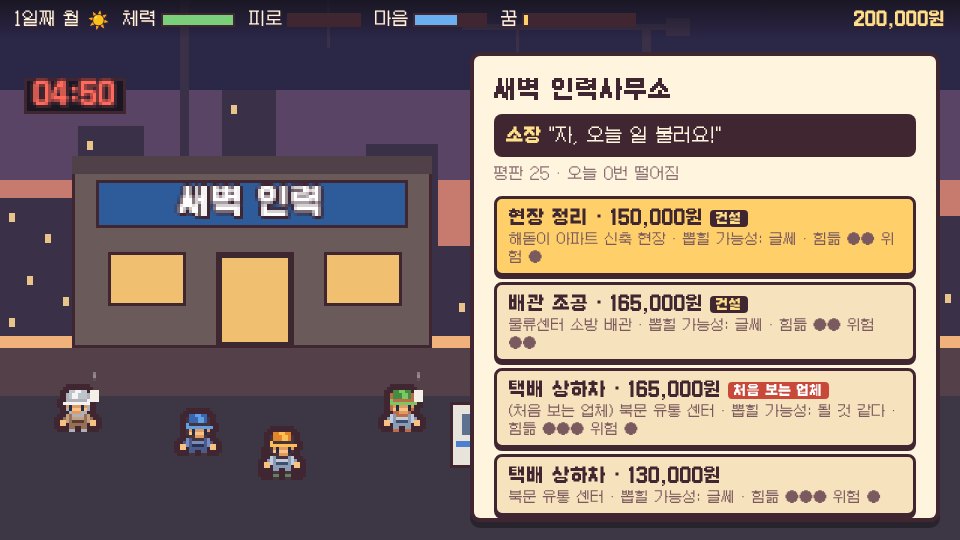
City of Laborer A day-labour survival game that begins at a labour office at 4:30 a.m. Get hired and work one of eight sites by hand (site clean-up, parcel loading, a factory line, plumbing, crane signalling, bricklaying, a site canteen kitchen, carrying rebar), take home the day's pay envelope, and hear your coworkers' stories at a street stall. Fail to earn and you go hungry, lose your room and end up sleeping in a bathhouse or on the street. Save up day by day to reach the dream of one of three people: a young jobseeker, a father, and an older worker

City of Laborer

A day-labour survival game that begins at a labour office at 4:30 a.m. Get hired and work one of eight sites by hand (site clean-up, parcel loading, a factory line, plumbing, crane signalling, bricklaying, a site canteen kitchen, carrying rebar), take home the day's pay envelope, and hear your coworkers' stories at a street stall. Fail to earn and you go hungry, lose your room and end up sleeping in a bathhouse or on the street. Save up day by day to reach the dream of one of three people: a young jobseeker, a father, and an older worker

Why I built it I found myself thinking about the people who work in industrial parks and on construction sites, and wanted to make a game that players can relate to and keep coming back to, one that feels like being a worker at an early-morning day-labour market.

  • A full day loop: wake at dawn (or snooze, or rest), apply at the labour office (hiring odds depend on reputation, skill, age, oversleeping and how you look; when you're broke you can ask for an advance), morning work, lunch at the site canteen, afternoon work, the pay envelope (skill, weather pay, licences, a 10% agency fee), evening, then the diary
  • Eight hands-on site minigames, each job rated easy, normal or tough (tough jobs pay more but are harder): pick up debris and dodge the forklift, push parcels by label colour, press in rhythm, turn pipes into a line, lower a swinging load, stack bricks exactly, enter each order's arrows in sequence, and steady a tipping bundle of rebar
  • Survival: miss your living costs and you go hungry; fall two weeks behind on rent and you leave your room to sleep in a bathhouse or on the street (slower recovery, harder to get hired, catching colds). Weekly obligations (a student loan, money sent home, medicine), surprise bills, a normal or a hard-life mode, and you collapse if you go hungry or sleep rough for too long
  • Six coworkers whose stories you hear at the street stall, five skill levels and ranks, 18 stamps and a diary notebook, scenes and work clothes that wear down as you grow poorer, worker pixel art recoloured in code, and newly composed background music
  • TypeScript
  • Canvas 2D
  • Pixel Art
  • Web Audio
  • Game Design
  • Node.js Test
  • Playwright
  • GitHub Actions
Try it ↗
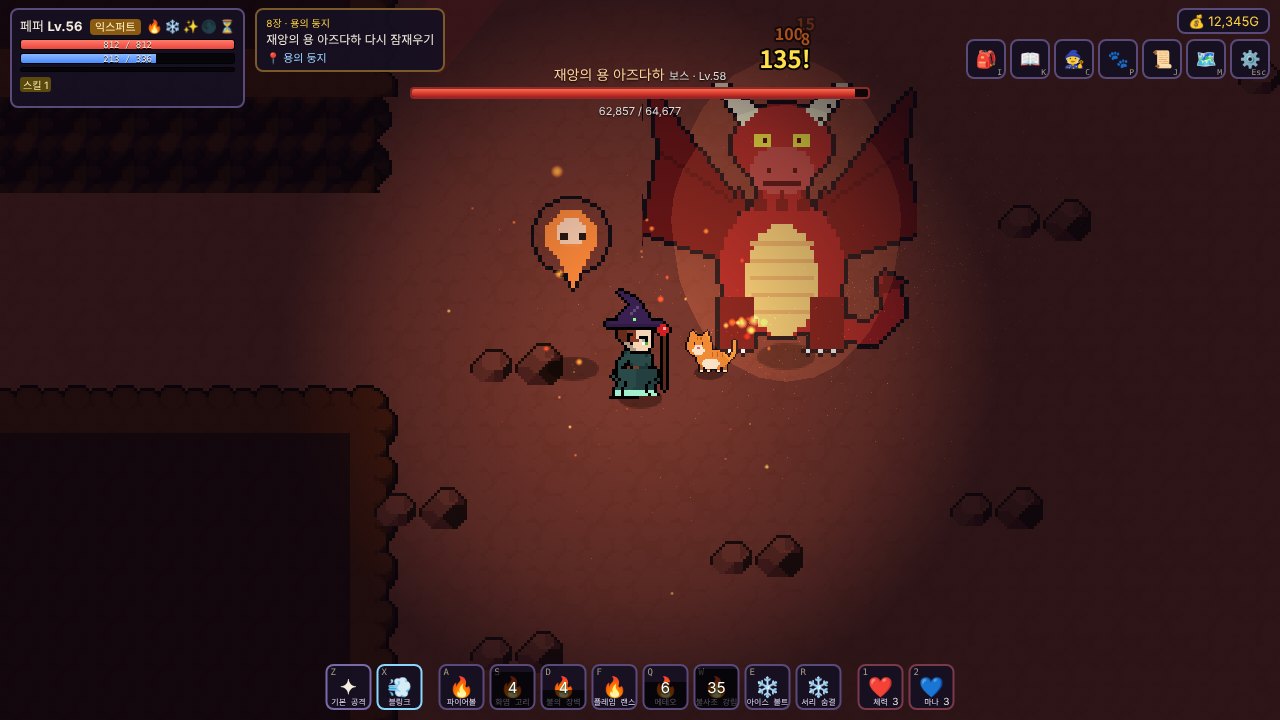
Magician Story A top-down pixel action RPG in which an apprentice mage passes the tower’s exams to rise from novice to expert. Twenty-five connected areas from Lumina to the dragon’s lair, 56 skills with elemental traits, bosses with gimmicks and puzzles that block the road, crafting, +20 enhancement and pet boxes, and a dragon at the end

Magician Story

A top-down pixel action RPG in which an apprentice mage passes the tower’s exams to rise from novice to expert. Twenty-five connected areas from Lumina to the dragon’s lair, 56 skills with elemental traits, bosses with gimmicks and puzzles that block the road, crafting, +20 enhancement and pet boxes, and a dragon at the end

Why I built it I wanted to build my own long, magic-centred adventure like the mobile action RPGs I used to play: hunt monsters, grow stronger and change class.

  • An eight-chapter journey on foot from Lumina to the dragon’s lair in the far south, with different quest types per chapter (search, escort, cart defence, crafting, enhancing, quizzes) and four class-change exams
  • 56 skills across nine elements, an always-on trait per element (ignite, freeze, corrupt and more) and a trait choice at Lv.3; arrow-key movement with every other key rebindable
  • A different gimmick for every boss (totems, mirror images, braziers, lightning rods, soul jars, ice crystals) with floor warnings, and road-blocking puzzles solved and dodged with the basic Blink skill (pressure plates, brazier order, crystals, boulders, ice paths, chasms)
  • Gear crafted from materials and +20 enhancement (items can break from +12, with protection scrolls), pet boxes by rarity and 16 pets with different effects, pixel-asset characters with hand-drawn clothes and hats, and per-area music composed in code
  • JavaScript
  • three.js
  • Pixel Art
  • Procedural Generation
  • Web Audio
  • Game Design
  • Node.js Test
  • GitHub Actions
Try it ↗
Toy Fish: Sea Fishing A 2D web fishing game where a toy angler taps in time as toy fish cross a target. Eight seas plus a hidden one, 112 species plus secret fish, gear farming and an encyclopedia

Toy Fish: Sea Fishing

A 2D web fishing game where a toy angler taps in time as toy fish cross a target. Eight seas plus a hidden one, 112 species plus secret fish, gear farming and an encyclopedia

Why I built it I wanted to feel again what the early days of an old mobile fishing game I loved were like.

  • Stop the star in the centre to cast, strike, then win the timing battle; reel back in before a bite if you like
  • Bosses appear by chance at bait-specific rates (entrance scene, roars, boss music); secret fish and a hidden sea found through hints in bottled letters
  • Toy-figure anglers (male and female, Kenney 3D models) and toy-block fish drawn into a 2D scene; sound synthesised in the browser
  • JavaScript
  • Canvas 2D
  • three.js
  • Web Audio
  • Sound Synthesis
  • Game Design
  • Node.js Test
  • GitHub Actions
Try it ↗
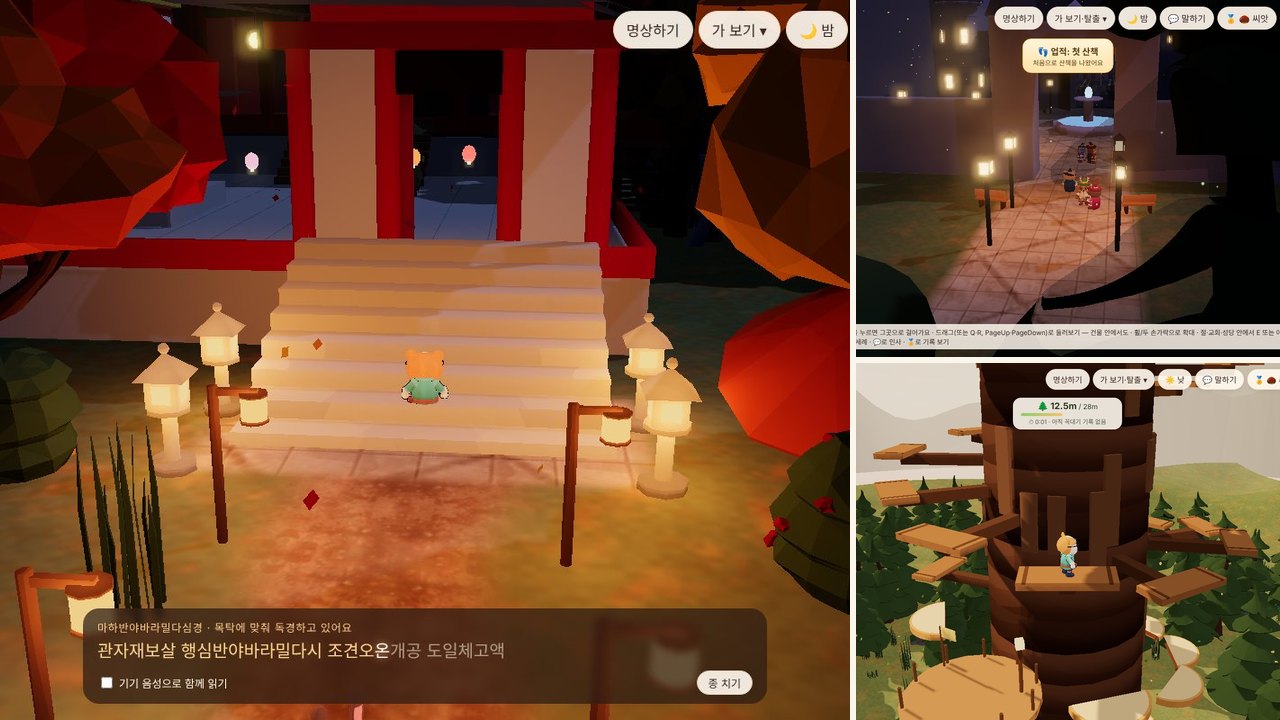
Mind Walk A calming 3D website for slow walks with animal friends: Maple Village, the Starlight Magic School and the Sky-Climb Forest jumping map

Mind Walk

A calming 3D website for slow walks with animal friends: Maple Village, the Starlight Magic School and the Sky-Climb Forest jumping map

Why I built it I wanted a cosy, musical place to wander with the animal characters I made and let the mind rest.

  • Bow, pray, read and practise magic at a temple, church, cathedral and magic school, with a mindful log and achievements
  • A jumping map that circles a giant tree (double jump, rest decks, records), plus a map and minimap
  • three.js with my own 3D animal models and music synthesised in the browser
  • three.js
  • JavaScript
  • WebGL
  • Web Audio
  • Sound Synthesis
  • 3D
  • Pathfinding
  • Python
  • GitHub Actions
Try it ↗
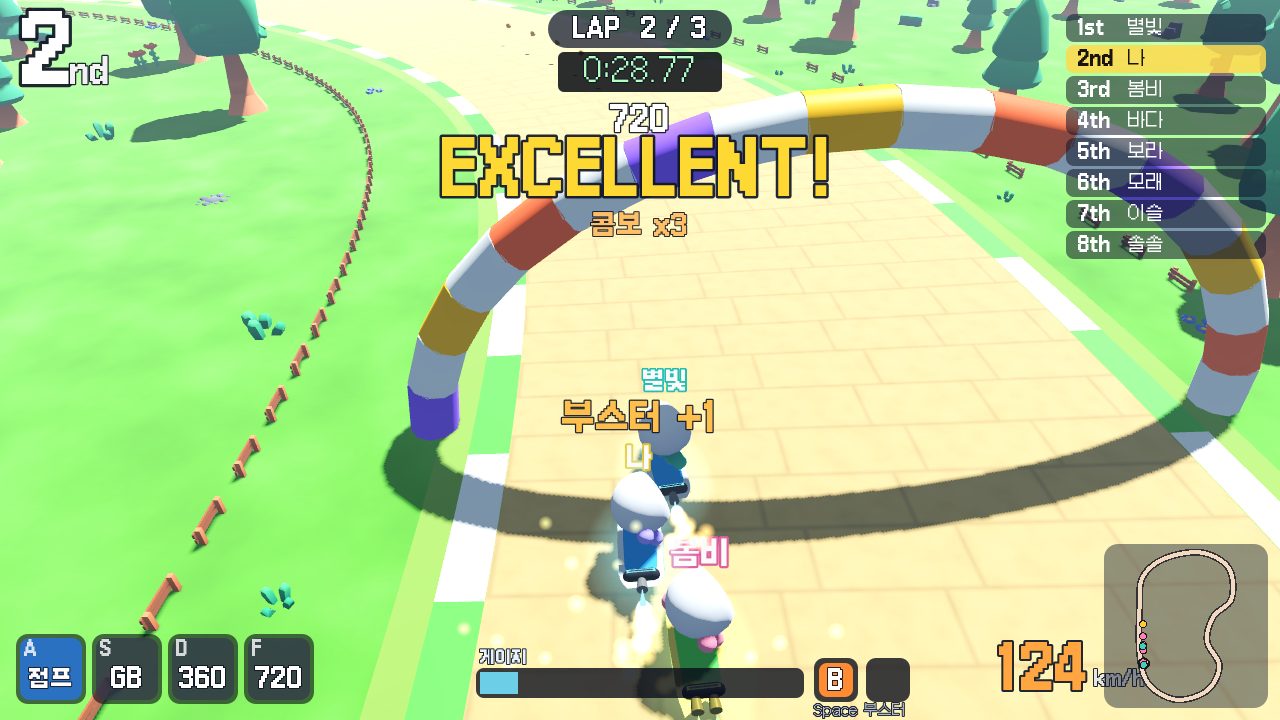
Windboard Racing A 3D web racing game on flying boards with mid-air tricks off the ramps (Godot)

Windboard Racing

A 3D web racing game on flying boards with mid-air tricks off the ramps (Godot)

Why I built it I wanted to relive, in the browser, the board racing I played as a kid to earn the board I wanted.

  • 13 mid-air tricks chained with commands and timing judgements, plus boosts
  • Six tracks with solo, 4v4 team, time attack and item modes
  • Levels, a board shop and lucky boxes; up to 8 players online with a room code
  • Godot 4
  • GDScript
  • 3D
  • WebRTC
  • Python
  • Sound Synthesis
  • GitHub Actions
Try it ↗
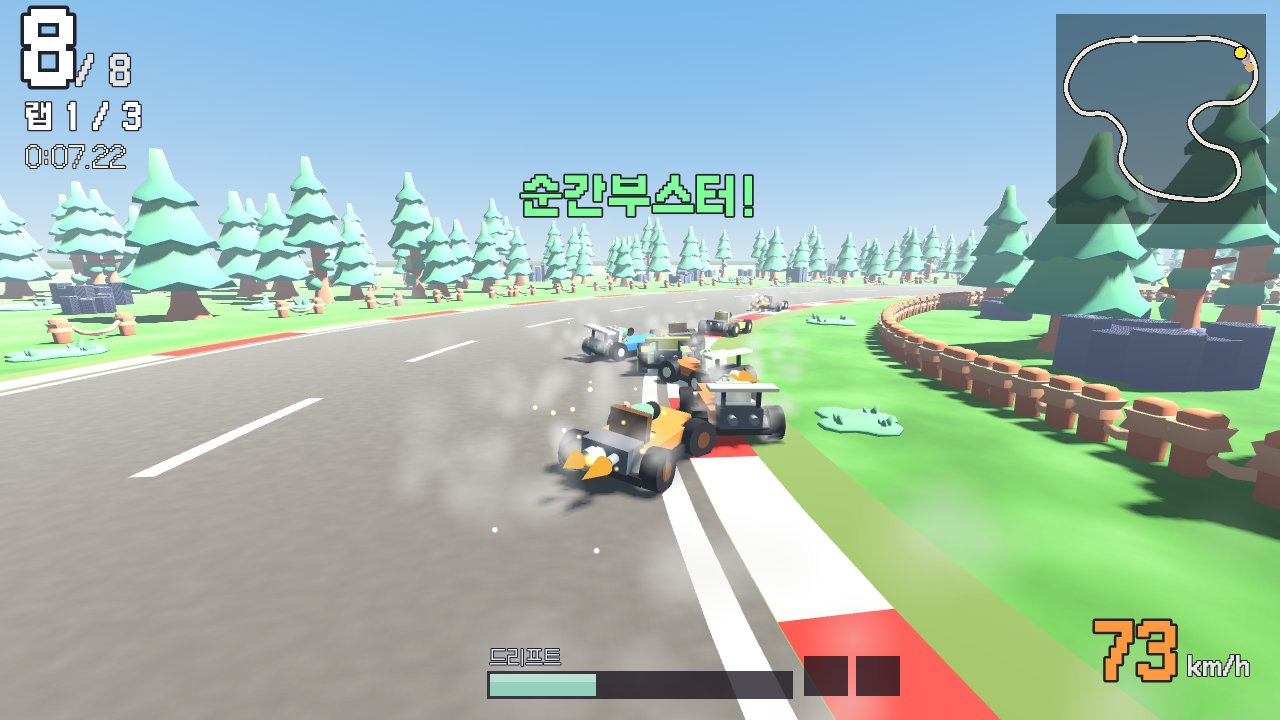
Toy Racing A 3D web racing game with toy karts on forest tracks (Godot)

Toy Racing

A 3D web racing game with toy karts on forest tracks (Godot)

Why I built it I wanted a kart racer in the browser where drifting, instant boosts and corner cutting all matter.

  • Drift to charge boosts, with instant boosts and other drift techniques
  • Six tracks, speed and item races against seven CPU drivers, and a kart shop
  • Split-screen for two, or up to 8 players online with a room code
  • Godot 4
  • GDScript
  • 3D
  • WebRTC
  • Python
  • Sound Synthesis
  • GitHub Actions
Try it ↗
Left Alone Puppy A side-scrolling web adventure: a puppy left behind on moving day travels to the city to find its owner

Left Alone Puppy

A side-scrolling web adventure: a puppy left behind on moving day travels to the city to find its owner

Why I built it I wanted to recreate the warmth of a puppy side-scroller I played as a kid, with a new story.

  • Eight stages, each with its own gimmicks and boss
  • Double jumps and barking, with a map linking the journey
  • PC and mobile, with pixel art drawn in code
  • TypeScript
  • Canvas 2D
  • Web Audio API
  • esbuild
  • GitHub Actions
Try it ↗
KeyJam A web rhythm game of falling notes, with keys, hammer and sun-and-moon modes, playable with YouTube music too

KeyJam

A web rhythm game of falling notes, with keys, hammer and sun-and-moon modes, playable with YouTube music too

Why I built it I wanted the feel of the online rhythm games I used to play, but with my favourite YouTube music.

  • 4–7 key lanes, a hammer-and-nails mode and a sun-and-moon path mode
  • Original songs synthesised live in the browser, plus public-domain classics
  • Tap along to a YouTube video to build its chart; big pads and haptics on phones
  • TypeScript
  • Canvas 2D
  • Web Audio API
  • YouTube IFrame API
  • esbuild
  • GitHub Actions
Try it ↗

05Skills

Languages

  • Java 11 (Spring Boot)
  • PHP 8.3 (Symfony, Laravel, CakePHP, FuelPHP)
  • Python
  • JavaScript
  • C++

Databases

  • MySQL
  • PostgreSQL
  • Oracle
  • SOQL (Salesforce)

Cloud · AWS

  • EC2
  • S3
  • RDS
  • CloudWatch
  • Auto Scaling
  • ELB
  • IoT Core (MQTT)

Cloud · Azure

  • Virtual Machines
  • Blob Storage
  • Azure Database for MySQL

CI/CD & servers

  • Docker
  • Jenkins
  • GitHub Actions
  • Apache
  • Nginx

Monitoring & testing

  • Grafana
  • CloudWatch
  • Selenium
  • Swagger

AI & dev tools

  • Claude
  • GitHub Copilot
  • IntelliJ IDEA
  • Eclipse
  • VS Code

Collaboration

  • Jira
  • Confluence
  • Backlog
  • Notion
  • Slack
  • Microsoft Teams
  • GitHub
  • Bitbucket

06Education

Education

  • 2019.03 – 2019.12 Smart Cloud IT Master Korea

    Completed programming and business Japanese training

  • 2013.03 – 2017.02 Dongyang Mirae University, Information & Electronic Engineering Korea

    Associate degree · GPA 3.75/4.5 (military service 2014–2015)

Certificates

Let's work together

I am always open to new opportunities and collaboration.

kmd3568@gmail.com